


Our Services

Intraface provides comprehensive Oral and Maxillofacial Surgery services for conditions or injuries affecting the mouth, face and jaw.
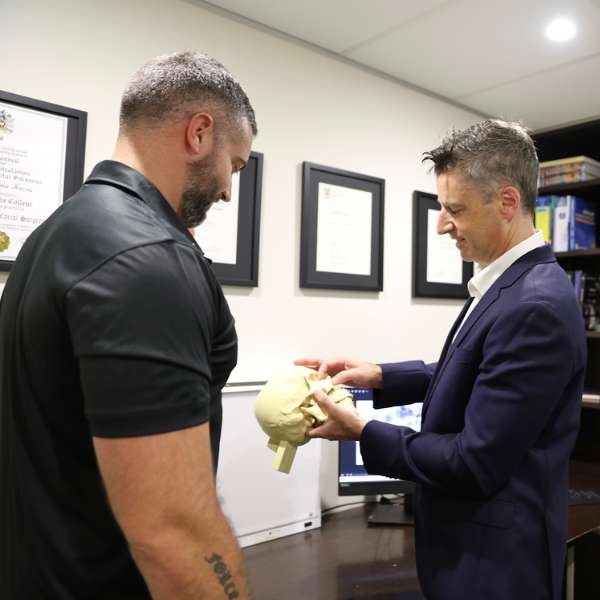
Doctor talking with a patient.

Oral and Maxillofacial Surgery at Intraface

All treatment begins with a careful clinical assessment and clear discussion of treatment options.
Our focus is on providing structured, evidence-based care in a supportive and well-managed environment.

Wisdom_Teeth

Wisdom Teeth

Wisdom teeth are the third molars located at the back of the upper and lower jaws.

While some people have enough space for them to erupt normally, many do not. When there is insufficient space, wisdom teeth can become trapped beneath the gum or against neighbouring teeth. This is known as impaction.

Impacted or partially erupted wisdom teeth may lead to pain, infection, swelling or damage to adjacent teeth. Removal may be recommended where problems are present or likely to develop.

Depending on the complexity of the case, wisdom teeth removal can be performed under local anaesthetic in our rooms or under general anaesthetic in hospital. The most appropriate setting will be discussed during your consultation.

Complex Dental Extractions

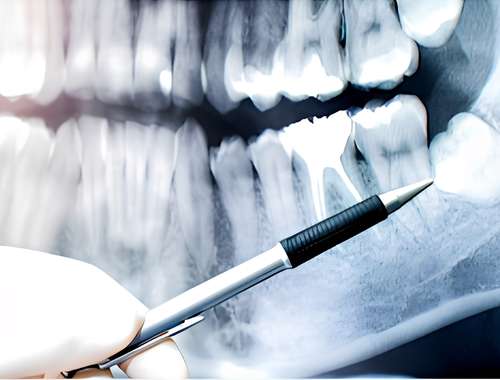
Complex dental extractions involve the removal of teeth that cannot be safely or comfortably treated with a routine extraction. This may include teeth that are severely broken down, impacted, fused to the bone, or located close to important anatomical structures such as nerves or the maxillary sinus. Oral and Maxillofacial Surgeons are specially trained to manage these situations using advanced surgical techniques and detailed imaging to ensure treatment is performed safely and effectively.

Treatment may be performed under local anaesthetic or general anaesthetic depending on the complexity of the procedure and patient needs. Our team works closely with referring dentists to ensure careful assessment, clear communication, and a safe surgical approach, with a focus on patient comfort and optimal healing.

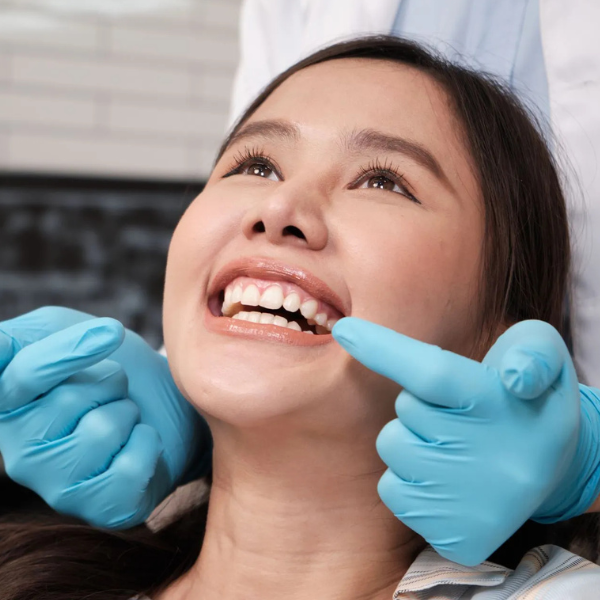
Young girl opens her mouse at dental checkup
Dental_Implants

Dental Implants

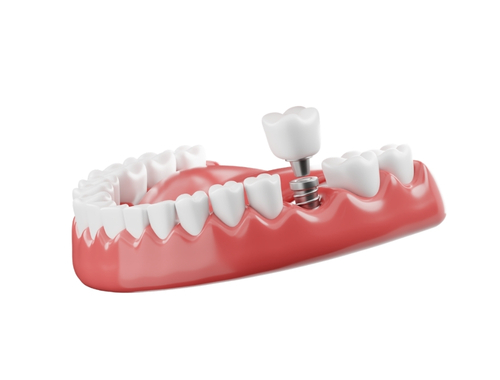
Dental implants are small titanium fixtures placed into the jawbone to function as artificial tooth roots. They provide support for a single crown, bridge or denture.

Implants may be considered when one or more teeth are missing and suitable bone support is present. In some cases, additional procedures such as bone grafting may be required.

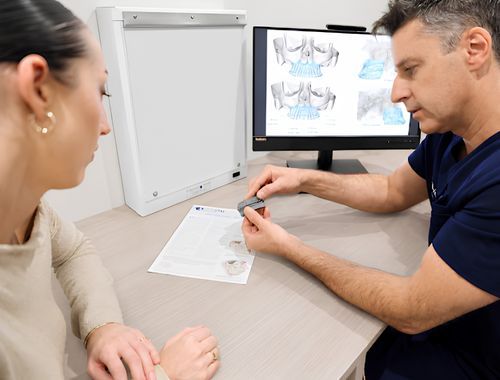
During consultation, your surgeon will assess bone quality, gum health and medical history to determine whether dental implants are appropriate for you. Careful planning is essential for successful implant treatment. Your consultation includes a clinical examination and 3D CT scan to assess bone structure and determine the most appropriate treatment approach.

Dental implant treatment involves the surgical aspect, or ‘below the gum’ procedures and the restorative aspect, or ‘above the gum’ work. This approach reflects the shared care between your Surgeon and your Dentist or Prosthodontist. Typically, the Surgeon is responsible for the implant procedures ‘under the gum’ while the Dentist/Prosthodontist is responsible for the new overlying crowns, bridges of dentures.

All-on-X Dental Implants

All-on-X Dental Implants (also referred to as All-on-4 or All-on-6) provide a long-term solution for replacing a full arch of missing or failing teeth. Using strategically placed implants, this treatment supports a fixed bridge that restores a complete set of teeth with improved comfort, function, and appearance.

Once placed, the implants act as artificial tooth roots and support a custom-made dental prosthesis that is securely attached.

This treatment may be suitable for patients who:

Old man smiling at the dentist
Treatment Planning

As with all dental implants, All-on-X treatment requires careful planning with thorough patient history and examination and a 3D CT scan to assess bone structure and determine the most appropriate treatment approach. It also involves a team approach with your Surgeon responsible for the ‘below the gum’ procedures and your Dentist or Prosthodontist managing the ‘above the gum’ prosthesis.

Implant Overdentures

For some patients, an implant-supported overdenture may be recommended. Unlike All-on-X, Overdentures are removable dentures supported by implants, providing improved stability and comfort compared with traditional dentures while still allowing easy removal for cleaning.
During your consultation, the Surgeon will discuss the most suitable treatment options to restore your function, comfort, and confidence.

Dentoalveolar Surgery

Dentoalveolar surgery involves procedures affecting the teeth and surrounding jawbone. This includes:

  • Removal of teeth
  • Management of impacted teeth
  • Removal of jaw cysts or localised pathology

Many dentoalveolar procedures can be performed under local anaesthetic. More complex cases may require treatment in hospital under general anaesthetic.

Recommendations are based on imaging, clinical findings and your individual health considerations.

Dentoalveolar_Surgery

Bone Grafting and Sinus Lift

Bone Grafting and Sinus Lift Procedures
Bone Grafting

Bone grafting of the jaws is sometimes required as part of dental implant treatment. It is also referred to as pre-prosthetic bone grafting. Grafted bone increases the usable bone which makes dental implant placement more reliable. Bone grafting may be performed at the same time as dental implant placement, or as a separate procedure beforehand (staged). There are several sources of grafted bone available.

Synthetic Bone Graft

Synthetic bone substitutes are the most common form of bone graft used. They are specially created in a laboratory to behave like natural bone. This allows them to be adapted to your specific needs and treatment plan.
Autograft
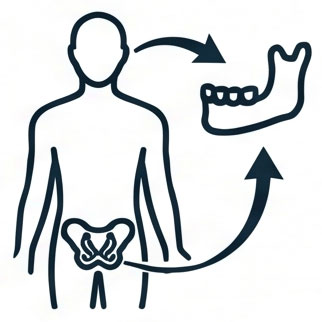
Autograft

Occasionally, a small area of your natural bone (Autograft) is harvested and placed at the implant site. This may be a small area of jaw bone adjacent to the implant site. Occasionally, a larger autograft from your hip may be recommended. Your Surgeon will discuss with you the most appropriate bone graft type and whether it is best placed as an immediate or staged process.
Sinus Lift
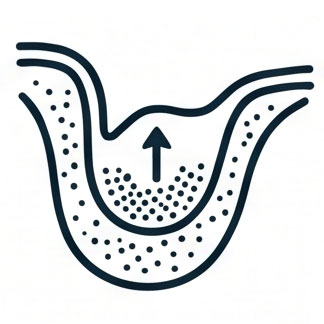
Sinus Lift

A sinus lift requires placement of bone graft or a bone graft substitute within the sinus cavities of the upper jaw (maxilla). The bone graft serves to increase the usable bone in an area where the natural bone is thin or deficient. The surgery involves accessing the sinus through a small incision in the gums, graft placement, then meticulous sinus repair. The dental implant is usually placed 4-6 months later.
Facial_Trauma

Facial Trauma

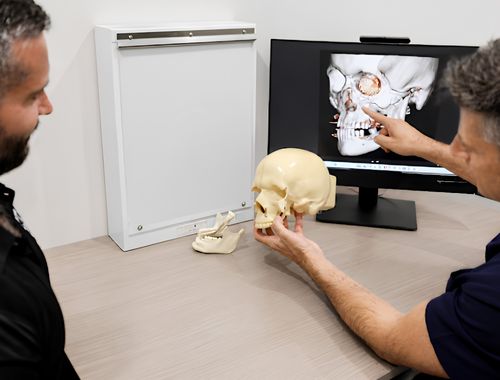
Maxillofacial injuries, commonly referred to as facial trauma, involve injury to the mouth, jaws and facial bones. These injuries may occur as a result of sporting incidents, motor vehicle accidents, workplace injuries or other unexpected events.

Acute trauma is often initially managed in public hospitals. Dr Richard Harris holds a public appointment as a Specialist Consultant at the Royal Brisbane and Women’s Hospital, one of Australia’s busiest trauma centres, where he is actively involved in the management of complex facial injuries.

Orthognathic Surgery

Orthognathic surgery, also known as corrective jaw surgery, addresses jaw misalignment or skeletal imbalance.

It may be considered when jaw position affects bite function, chewing, speech or overall jaw balance. Treatment planning is comprehensive and often involves collaboration with an Orthodontist.

This type of surgery requires detailed assessment, imaging and careful preparation. All aspects of the process, including risks and recovery, are discussed thoroughly before proceeding.

Orthognathic_Surgery
Oral_Pathology

Oral Pathology

Oral pathology involves the diagnosis and management of diseases affecting the mouth, jaws and surrounding structures.

Assessment typically includes:

  • Detailed medical history
  • Clinical examination
  • Diagnostic imaging, such as X-rays or CT scans where required
  • Biopsy of tissue if indicated

Once a diagnosis is confirmed, treatment options are discussed clearly and tailored to the individual case. Your Surgeon may work in collaboration with others involved in your care, such as Oncologists or Neurosurgeons.

Professional Affiliations

Surgeons consulting at Intraface maintain active professional affiliations, including:

  • Australian Medical Association (AMA)
  • Australian Dental Association (ADA)
  • Australian Dental Association Queensland (ADA QLD)
  • Australia and New Zealand Association of Oral and Maxillofacial Surgeons (ANZAOMS)
logo_AMA
logo_ADAQ
logo_ANZAOMS

These affiliations reflect engagement with professional standards and ongoing development within the specialty.